Jealousy: What It Is, Why It Sticks, and How to Handle It
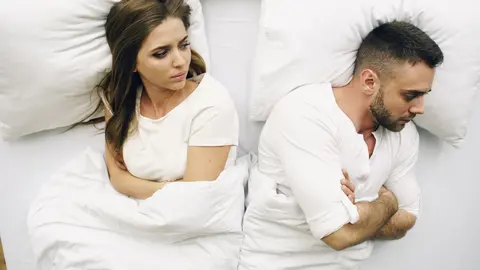
Jealousy in one of the most destructive forces in romantic relationships. It’s a toxic cocktail of hurt, anger, and fear that emerges when we feel a threat to our relationship from a real or imagined rival. It’s the hurt that says, “I’m not valued,” the fear that whispers, “I could lose you,” and the anger that we aren’t just losing someone we love, but they are casting us aside for someone else.
To put it into perspective how destructive jealousy can be, over 13% of murders involve one spouse killing another, with jealousy being the most common motive. But even when it doesn’t turn violent, jealousy destroys relationships through constant suspicion, controlling behaviour, and emotional warfare that pushes partners away often creating the abandonment, the jealous person fears the most.
What’s most concerning of all is that, studies show that once the jealous partner initiates suspicious behaviour, it breeds more suspicious behaviour from their partner, developing trust issues, creating a vicious cycle that destroys even the strongest of relationships.
So it’s safe to say that learning to recognize and regulate jealousy matters for the health of any relationship.
The Psychology of Jealousy: Hardwired for Heartbreak
Types of Jealousy
Reactive jealousy: When there's an actual threat e.g., your partner really is flirting, fantasizing about others, or worse. Surveys show that 98% of men and 80% of women report having sexual fantasies about people other than their partners. Among college students, 1 in 2 women and 2 in 5 of men admit to kissing or fondling someone outside their committed relationship.
Suspicious jealousy: Emerges without a real reason. It's the jealousy of overactive imagination and paranoid attention, ranging from mild worry to complete paranoia about threats that don't actually exist.
What Gets Us Jealous?
From an evolutionary perspective, jealousy exists because it once served a survival function. Our ancestors who cautiously protected their relationships from interference were more likely to maintain partnerships and successfully raise offspring. Those who were nonchalant about romantic rivals? Their genes didn't make it to the present day.
What gets men jealous vs what gets women jealous:
Men are typically more threatened by sexual infidelity a response linked to paternity uncertainty (fear of not knowing if children are truly theirs)
Paternity uncertainty: A fancy way psychologists express men’s fear of raising another man’s offspring ending their own bloodline
Women, meanwhile, react more strongly to emotional infidelity, fearing the loss of resources and support needed to raise children aka parental investment
Parental investment: A fancy way psychologists express women’s fear of choosing a deadbeat father
Studies using brain imaging and physiological monitoring confirm that men and women experience different types of jealous distress. When imagining their partner's infidelity, men show stronger stress responses to thoughts of sexual betrayal, while women react more intensely to emotional infidelity scenarios.
Interestingly, this sex difference disappears in same-sex relationships and among people who practice consensual non-monogamy, suggesting that cultural factors and reproductive concerns drive these patterns rather than fundamental gender differences.
But evolution only explains the backdrop. Several psychological factors keep jealousy alive in modern relationships.
What Keeps Jealousy Alive in Relationships?
Dependency and low alternatives. When we feel like we need our partners simply because we have poor alternatives, any threat to the relationship becomes terrifying leading to jealousy. In contrast, if we have desirable alternatives then we are less likely to get jealous because we have less to lose if the relationship ends.
Feelings of Inadequacy. Jealous increases when we worry that we can’t measure up to our partners’ expectations or that we are not what our lovers are looking for. Those with higher self-esteem will have more self-confidence in the relationship leading to less jealousy. But what’s interesting is that even people who generally have high self-esteem will be vulnerable to jealousy if they doubt their ability to satisfy their partner.
Attachment Insecurity. When we have a preoccupied attachment style we will find that most often than not, we chronically worry that our partners don't love us enough, creating perfect conditions for jealousy.
Who Gets Us Jealous?
Attractive rivals. Even though we can at times get jealous when our partners show interest in other people (friends or past lovers for example). What gets us the most is a romantic rival who makes us look bad by comparison. This in most cases is someone who we think is more attractive than us.
Bad news: We tend to overestimate how desirable our rivals are and in turn suffer more distress than warranted.
Good news: Our rivals are not as attractive to our partners as we think they are.
Coping with Jealousy: Strategies That Actually Work
The most powerful thing you can do is separate your sense of self-worth from whether your partner chooses you over someone else. Yes, it hurts when someone you love is attracted to another person. But your value as a human being doesn't rise and fall with your relationship status.
Four Practical Steps to Manage Jealousy:
Reduce catastrophic thinking: Remind yourself that losing a partner while painful does not mean losing your identity or your future.
Strengthen your self-esteem:Focus on your strengths, accomplishments, and the qualities that make you uniquely you, independent of anyone else's validation.
Communicate clearly: Talk with your partner about boundaries, expectations, and reassurance instead of letting insecurity fester.
Nurture the relationship: When both partners feel valued and treated fairly, jealousy has less room to grow. Focus on what you can do to improve the relationship rather than obsessing over external threats. A strong, satisfying partnership is naturally more resilient.
Remember: knowing you're valuable and worthwhile with or without anyone's love isn't just good advice. It's an essential relationship safety equipment.